
Hyundai Motor India Ltd has become the country's fifth most valuable auto firm by market valuation in its debut trade on Tuesday. Shares of Hyundai Motor India Ltd, the Indian arm of South Korean automaker Hyundai, listed at Rs 1,931, reflecting a decline of 1.47 per cent against the issue price of Rs 1,960 on the BSE earlier in the day. The stock slumped 7.80 per cent to Rs 1,807.05 during the day and finally ended at Rs 1,820.40 apiece, down 7.12 per cent.

The National Company Law Tribunal (NCLT) on Wednesday deferred the hearing on Vedanta Ltd's proposed demerger to September 17, as market regulator Sebi is yet to complete the scrutiny of the proposal, while the central government has raised certain objections. The matter, which was part-heard earlier, had been adjourned to August 20.

'It was diminishing even before Trump came to power.' 'The US was at the centre of the global economy. That position is going to become less and less important and less central.'

Much is riding on the role of market intermediaries to get this platform going
Much is riding on the role of market intermediaries to get this platform going

Following a ban on real-money gaming, Dream Sports, the parent company of Dream11, is strategically expanding its portfolio across 11 companies, including a new venture into wealth management and stockbroking, with a focus on serving a mass user base through AI-first solutions, cofounder Harsh Jain confirmed.

Prime Minister Narendra Modi convened a roundtable with AI startup CEOs and held bilateral meetings with global leaders at the India AI Impact Summit, focusing on AI's potential across sectors and international cooperation.

The National Stock Exchange (NSE) has deferred its plan to change the expiry day of all index and stock derivatives to Monday from Thursday until further notice following markets regulator Sebi's consultation paper. The shift, which was scheduled to take effect on April 4, 2025, would have seen all index and stock derivative contracts move from Thursday to Monday.

Prime Minister Narendra Modi convened the Cabinet Committee on Security to address the impact of the West Asia conflict on Indian citizens, focusing on safeguarding them from the conflict's effects and ensuring the smooth flow of essential supplies.
British multinational BAT Plc on Wednesday trimmed its ownership in conglomerate ITC by divesting a 2.5 per cent stake for Rs 12,927 crore ($1.51 billion) through a block deal, according to a revised term sheet accessed by PTI. Following the stake sale, shares of ITC went lower by 1.15 per cent to trade at Rs 421.15 apiece on the NSE.

There are thousands of stocks within the NSE, for example, that are rarely traded.


The question is whether the clocks allow enough time for two deeply mistrustful sides to get there, and whether the surface calm holds long enough for the paddling to produce something before the ceasefire ends on April 22, notes Prem Panicker in his must read blog on the Iran War.

In a move that could have implications for market share dynamics, the Securities and Exchange Board of India (Sebi) has permitted the National Stock Exchange (NSE) and the BSE to alter the days for settlement of equity derivatives contracts.
'The investigation is at a very critical stage. We are not going to give every single document.'
State Bank of India-led public sector banks posted a record cumulative profit of Rs 49,456 crore in the second quarter of the current fiscal, reflecting a 9 per cent year-on-year growth despite two lenders reporting a decline. All 12 public sector banks (PSBs) together made a profit of Rs 45,547 crore in the September quarter of FY25.

The IPO wave of 2025 is here, and it's bigger than ever. From fintech unicorns to financial powerhouses and infrastructure giants, some of India's biggest names are all set to make their stock market debut. PhonePe, Zepto, Tata Capital, NSE, NSDL, and JSW Cement are just a few of the highly awaited listings that have investors and analysts buzzing with excitement.

Bihar is now among the top 10 states in terms of investor base, surging past better-off states like Delhi, Haryana, and Punjab.

The Reserve Bank of India said on Thursday it would allow banks, primary dealers and national financial institutions to hedge interest rate risks on the country's exchanges.\n\n\n\n

Sebi is working with other regulators to expand the CAS framework.
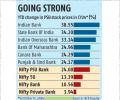
Stock Market News today, PSU banks: The year 2024 was a roller-coaster ride for Indian stock markets, marked by volatility driven by the Lok Sabha elections, Union Budget 2024, a slowdown in corporate earnings, and sticky inflation. Geopolitical tensions - particularly between Israel and Iran in West Asia - along with various stimulus announcements by China and yen carry trade rocked the equity markets throughout the year.

SEBI alleges Jane Street placed bets on the stock market falling and then acted in a way to make the market actually fall so it could win its bet.

The United States, which entered this war in expectation of a short, sharp win along the Venezuela model, is now preparing for deeper involvement in a conflict it does not fully control, without the allies it typically relies on, against an adversary that is not behaving as expected, in a global environment that is already absorbing economic shock. Prem Panicker continues his must read daily blog on the Gulf War.

In calendar year 2024, the stock price of Trent has zoomed 160% As compared to the 18% rally in the BSE Sensex during the same period. It has outperformed the market in the past 10 consecutive years.
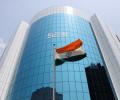
The market regulator's newly proposed selection criteria for the over Rs 400-trillion-a-day futures and options (F&O) market could pave the way for the entry of popular stocks such as Life Insurance Corporation (LIC) of India, Jio Financial Services, Zomato, Paytm, DMart, and Adani Energy into the derivatives segment. The Indian derivatives market, which accounts for most of the trading volumes, could see big churn with over two dozen exits from the current list of 182 stocks due to an upward revision in the eligibility thresholds.

When everyone has footage and no one can verify it, the loudest voice wins, notes Prem Panicker who begins a daily blog on the War in the Middle East.
Share prices of the two top stock exchanges - the Bombay Stock Exchange and the National Stock Exchange - are expected to rise after the Securities and Exchange Board of India proposed to allow domestic institutional investors, insurance firms and banks to hold up to 15 per cent stake in these exchanges as against the current limit of 5 per cent.
We visit a few brokerage houses and the stock exchanges to demystify the nuances of mobile trading of stocks and derivatives.

The Securities and Exchange Board of India (Sebi) is set to introduce key reforms aimed at facilitating smoother mega initial public offerings (IPOs). Key among the proposals is a reduction in the quota reserved for individual investors - those applying for less than Rs 2,00,000 per application - from the current 35 per cent to 25 per cent for large IPOs (issue size above Rs 5,000 crore).

Shares of state-owned bank stocks were under pressure on Monday due to muted deposit and credit growth numbers reported by these lenders in the October-December quarter (Q3) of 2024-25 (FY25). The Nifty PSU Bank index was down 4 per cent, with Union Bank of India emerging as the biggest loser as its shares fell 7.5 per cent to close at Rs 114.7, followed by a 5.7 per cent drop in shares of Bank of Baroda (BoB) to Rs 228 and a 4.7 per cent slide in shares of Bank of India to Rs 99.8 on the National Stock Exchange.

Security forces in Jammu and Kashmir have successfully neutralized a Jaish-e-Mohammed (JeM) terror module, known as the 'Israel Group,' after a year-and-a-half-long operation in the Kishtwar region.

Stock market regulator Securities & Exchange Board of India (Sebi) has widened the scope of index-based options by allowing exchanges to offer option contracts based on Sensex and Nifty with a tenure of up to five years.

The Securities and Exchange Board of India (Sebi) is considering segregation of settlement for proprietary trades and retail trades to avoid misuse and circumvention by certain brokers, its chairperson Madhabi Puri Buch said recently. Proprietary trading refers to trades done by brokers and other financial institutions using their own capital. "There are some people who are permitting access to their clients through prop accounts for a variety of reasons, including wanting to fund their margins.

Retail investors now own a larger share of smallcap companies than they did a year ago, thanks to their conviction in mutual fund (MF) schemes focused on this segment. Data from Capitaline shows that MFs' average holding in the National Stock Exchange Nifty Smallcap 250 Index stood at 9 per cent at the end of the October-December quarter of 2023-24 (FY24), up from 7.76 per cent in the same quarter of 2022-23.

Crisil's experience is that these reports improve volumes for the companies covered.

The Jane Street-Sebi saga is more than a legal dispute -- it's a litmus test for India's ambitions as a global financial hub.
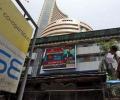
The stock exchange BSE has called off the merger of its unit at the Gujarat International Finance Tec-City International Financial Services Centre (GIFT IFSC), India International Exchange (India INX), with NSE International Exchange (NSE IX), a similar unit floated by rival National Stock Exchange (NSE), according to sources familiar with the development. BSE and NSE had been in discussions for the merger for over a year, but it has yielded no results, they said.
The Securities and Exchange Board of India is keeping a close watch on the movements in the stock prices at the Bombay Stock Exchange and the National Stock Exchange, which hit the upper circuit halting the trade for the day, a senior finance ministry official said.

Pakistan's Ministry of Economic Affairs X account was hacked and a fake appeal was posted, calling for more international loans to help defuse tensions with India following the Pahalgam terror attack. The post urged the international community to help de-escalate the situation and requested more loans to address "heavy losses" caused by the tensions. The hacking incident occurred during a crucial meeting of the IMF executive board to decide on the next installment of a USD 7 billion loan for Pakistan.
